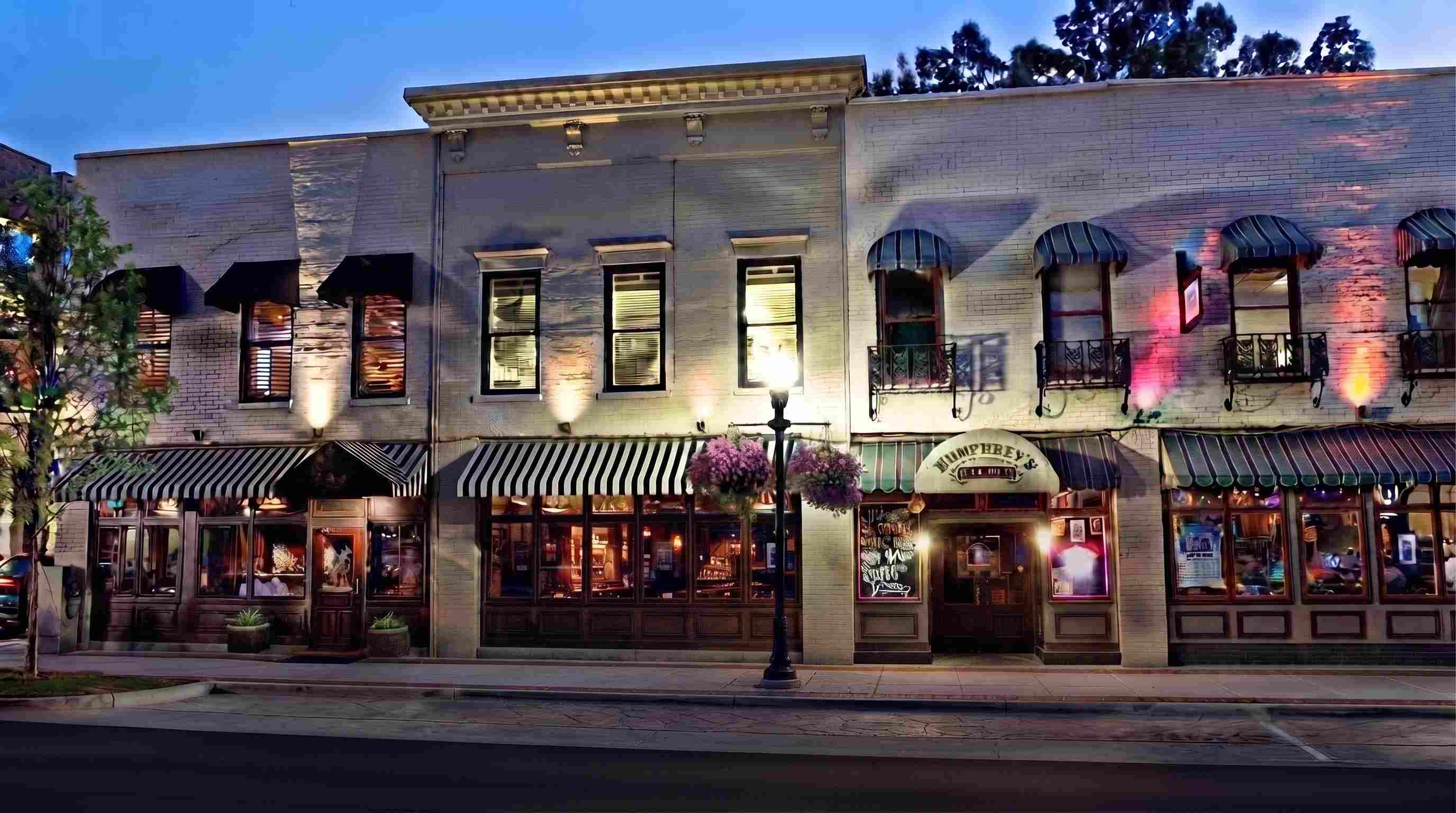
Twickenham is not a neighborhood the way Hampton Cove or Heritage Plantation is a neighborhood. It is a place with a two-century claim on its identity — the original site of the town before it became Huntsville, home to more than 65 antebellum structures, and the location where Alabama was constitutionally born. Fewer than 150 families live here. They know each other. They have consciously chosen to inhabit a piece of American history and accepted the responsibilities that come with it.
If you are considering buying in Twickenham, there are two things you must understand before anything else. First, the Certificate of Appropriateness (COA) requirement governs every exterior change you will ever make to your property — from repainting to re-roofing to replacing a window. This is not optional or negotiable; it is the condition of living here. Second, this is also one of Huntsville's most genuinely walkable addresses, one block from downtown, with Cotton Row and a dozen other restaurants reachable on foot. Those two facts together define the Twickenham proposition. This guide covers both honestly.
Community Snapshot
History — From Twickenham to Huntsville
Before it was Huntsville, it was Twickenham. Founding father Leroy Pope arrived in the Tennessee Valley in 1805, chose the high ground above the Big Spring, and in 1810 christened the settlement Twickenham after a fashionable English borough outside London associated with poets and gentlemen of means. He saw in this fertile river valley the beginnings of a Southern Athens. By 1812, a more democratically minded territorial legislature renamed the town Huntsville after John Hunt, the area's first white settler. The name Twickenham survived only in the neighborhood that Pope himself defined.
The district flourished rapidly. By 1819 — when Alabama was admitted to the Union as the 22nd state — Huntsville was the largest city in Alabama, and the constitutional convention was held on Franklin Street within what is now the historic district. Early cotton prosperity funded an extraordinary concentration of fine architecture across five decades. The Civil War changed Twickenham: Union forces occupied Huntsville from 1862 to 1865, seizing many of the finest homes as headquarters and hospitals. This occupation was, paradoxically, a preservation event — the homes were maintained, preventing the deterioration that abandonment would have caused. Twickenham's antebellum fabric survived intact to a degree rare in the post-war South.
Preservation efforts began in the 1960s as urban renewal threatened Huntsville's historic neighborhoods. At least 60% of property owners within the Twickenham boundary had to affirm a petition to establish the district — they did, and in 1972 it became Huntsville's first designated historic district. A 2015 boundary expansion added 39 additional homes, bringing the total to 360 contributing buildings.
Architecture — A Living Museum
The Huntsville Historic Preservation Commission describes Twickenham as "a living museum of American architectural styles dating from 1814." This phrase captures something real: Twickenham is not a preserved snapshot of one era. It is a layered accumulation of two centuries of American architectural history, with more than 65 antebellum homes as its crown jewel. Walking Adams Street or Echols Avenue is the closest experience available in Alabama to walking through a functioning early 19th-century American neighborhood — inhabited continuously since the homes were built, adapted across generations, but architecturally intact.
| Style | Period | What to look for |
|---|---|---|
| Federal Period | 1814–1830s | Symmetrical facades; low-pitched roofs; Palladian windows; delicate classical details — the earliest and most historically significant style in the district |
| Greek Revival | 1830s–1850s | Heavy classical columns (Doric, Ionic, Corinthian); bold pediments; temple-front facades — the dominant style of the antebellum Southern elite |
| Italianate | 1840s–1870s | Low-pitched bracketed roofs; round-arched windows; ornate decorative brackets under eaves; asymmetrical facades |
| Gothic Revival | Post-Civil War | Pointed arches; steeply pitched roofs; decorative vergeboard; present in district churches and some residential structures |
| Queen Anne | 1880s–1900s | Asymmetrical facades; wraparound porches; varied textures; decorative spindle work; multiple gables |
| Colonial Revival | Late 1800s–1920s | Return to Georgian and Federal forms; columned porches; red brick; mixes historical references with contemporary construction |
| Craftsman / Bungalow | 1910s–1930s | Low-pitched roofs with broad overhangs; natural materials; wide front porches — common in the 2015 expanded boundary areas |
Landmark Homes
Scenethat Tours runs Pre-Civil War Homes Walking Tours year-round covering 20 antebellum homes with local historian guides — from $65/person. New residents consistently report that taking the tour gives them historical context for their own home and street that they couldn't have gathered any other way. It's worth doing in your first year of living here.
The COA Process — What Every Buyer Must Know
This is the section most real estate listings about Twickenham quietly omit. Living in the district means accepting a regulatory framework that goes beyond standard city zoning. Every exterior change to a property — including changes that would not normally require a building permit — requires advance approval from the Huntsville Historic Preservation Commission in the form of a Certificate of Appropriateness (COA). This approval must be obtained before work begins. Starting exterior work without a COA is a violation of the historic district ordinance.
Understanding this process is not optional for Twickenham buyers. It shapes your renovation timeline, your renovation budget, and your relationship with your home in a fundamental way. The good news: it is not as daunting as it sounds, the staff are genuinely helpful, and most straightforward projects move through the process smoothly.
What requires a COA
| Project type | COA? | Notes |
|---|---|---|
| Roofing replacement or material change | YES | Material, color, and profile must be compatible; original material preferred |
| Window replacement or modification | YES | Proportions, profiles, and glazing patterns are character-defining; replacements must match original style |
| Exterior siding changes | YES | Material changes closely reviewed; adding or removing historic siding requires COA |
| Additions to the structure | YES | New construction must be compatible; setbacks, scale, and materials reviewed |
| Fence installation or changes | YES or Expedited | Material, height, and style reviewed; fencing is a character-defining feature |
| Demolition of any structure or feature | YES — highest scrutiny | Alternatives such as rehabilitation must be explored; demolition rarely approved |
| HVAC / generators visible from street | YES | Visibility from public right-of-way is the determining factor |
| Exterior paint color changes | Expedited Review | Common application; staff can approve without full commission meeting |
| Landscape changes visible from street | May be required | Removal of mature trees or major grading changes reviewed |
| Interior renovations (no exterior impact) | NO | Interior work is entirely the homeowner's decision — only exterior changes trigger review |
| Routine maintenance — painting same color, repointing mortar in kind | NO | Like-in-kind maintenance does not require review |
How the COA process works — step by step
For minor work and routine maintenance, the HHPC has an Expedited Staff Review process that allows the Historic Preservation Planner to approve applications without waiting for a full commission meeting. Paint color changes, minor repairs, and mechanical equipment not visible from the street are commonly eligible. Ask at your initial consultation whether your project qualifies — it can save significant time.
Talk to Katherine Stamps before hiring any contractor. Some contractors are unfamiliar with COA requirements and may begin work before approval is secured — which puts you in violation, not them. Budget both time (monthly review cycle) and money (historic materials often cost more than modern alternatives) for exterior projects. The Federal Historic Tax Credit (20% for income-producing properties) and Alabama Historic Tax Credit may offset rehabilitation costs — consult a tax professional. Your neighbors are your most practical resource: in a neighborhood of fewer than 150 homes, experienced owners who have completed multiple COA applications are close at hand.
Community Life & Annual Events
In a district of fewer than 150 homes, with residents who have consciously chosen to live in a historic neighborhood with all its attendant responsibilities, community forms naturally. The Twickenham Historic Preservation District Association (THPDA) meetings are well-attended — not out of obligation but out of genuine investment in the place. Residents know each other. Neighbors stop to socialize on morning walks. The fabric is as close-knit as any neighborhood in Huntsville.
The signature annual event is the Spirit of Christmas Past Homes and Luminary Tour, held one day in December. The entire neighborhood is lit with luminaries on every street, and select historic homes open their doors to the public for interior tours — a rare opportunity to see inside these otherwise private historic homes. It is one of the most attended events on Huntsville's annual cultural calendar and the moment when Twickenham's living character is most visible to the broader city.
Scenethat Tours runs Pre-Civil War Homes Walking Tours year-round (~$65/person), covering 20 antebellum homes with local historian guides. The THPDA annual meeting (typically spring) is the fastest way to meet neighbors and connect with experienced homeowners who can share practical renovation knowledge. All of downtown Huntsville's events — Panoply Arts Festival, Galaxy of Lights, Huntsville History Month in October, Concerts in the Park — are within walking distance.
Walkable Dining, Culture & Parks
One of Twickenham's most underappreciated attributes for first-time visitors is its walkability. The original 1800s street grid — sidewalk-lined, well-lit, and laid out when walking was the primary mode of transportation — remains intact. Residents walk to dinner, to performances at the Von Braun Center, to Saturday morning coffee. Downtown Huntsville's growing food and arts scene is not a car trip away. It is outside the front door.
Dining within walking distance: Cotton Row (upscale surf and turf on Courthouse Square), Mazzara's Vinoteca (authentic Italian in an 1848 Colonial Revival building), Jack Brown's Beer & Burger Joint, La Esquina Cocina (Mexican and margaritas), Bus Stop Coffee (daily ritual spot for many residents), Baker & Able rooftop bar (Hilton on Jefferson Street — cocktails with views of the historic district), and 1892 East Restaurant in adjacent Five Points.
Culture and institutions: Weeden House Museum and Garden is within the district at 300 Gates Ave — guided tours twice daily, period architecture and garden, home of artist and poet Maria Howard Weeden. Huntsville Museum of Art, Von Braun Center, and Harrison Brothers Hardware (America's oldest hardware store, 1897, Courthouse Square) are all on foot.
Parks: Big Spring International Park — Huntsville's flagship downtown park with a large koi pond, Thrasher Fountain, and event lawn — is walking distance. Monte Sano State Park is a short drive for hiking and mountain views.
The Four Historic Districts
Twickenham anchors a cluster of four distinct historic districts that together give downtown Huntsville a concentration of preserved urban fabric unique in Alabama. Your neighbors to the north and east are worth understanding.
| District | Designated | Character |
|---|---|---|
| Twickenham | 1972 | Alabama's largest antebellum collection; Federal through Craftsman; fewer than 150 properties; most architecturally elite; 360 contributing buildings after 2015 expansion |
| Old Town | 1974 | Predominantly Victorian-era residential; Colonial Revival bungalows; the former East Clinton School (now Providence Classical School) is one of Huntsville's best Art Deco examples; homes date from 1828, most 1880–1929 |
| Five Points | 1999 | Middle-class housing evolution — vernacular Victorian, 1920s Bungalows, Cape Cod, Ranch styles; original 1892 East Huntsville Addition; growing food and nightlife scene; 19th-century grid with rear service alleys |
| Alabama A&M University | Local + NRHP + Alabama Register | Major educational institution; buildings 1927–1962; historically Black university chartered 1873; not primarily residential but significant institutional context |
Who It's For — and Who Should Look Elsewhere
Also considering Providence in Huntsville (the Village of Providence)? It shares the walkable urban character and downtown proximity but with modern new construction, two clubhouses, and a lively Town Center restaurant scene. The historic character and COA requirements are entirely absent. Different personalities, similar walkability proposition.
Key Contacts
- HHPC meetings: Second Monday of each month — applications due the last Monday of the preceding month
- Historic Home Locator: maps.huntsvilleal.gov/historicplaces/ — confirm your property's contributing or non-contributing status before purchasing
- THPDA: Connect through the historic preservation office or neighborhood residents
- Short-term rentals: A $150/year Short-Term Rental License is required from the City of Huntsville for rentals under 30 days; the license number must appear in all booking platform listings; COA requirements still apply to any exterior changes